Germany: Are We Even Up for It? Etteln Beats Hong Kong
The elves are packing
Talk to people in Germany these days, whether in boardrooms, at conferences, in the school café or at the supermarket checkout, and the same tune keeps playing. Everything is getting worse.
The mood is downright tolkienesque: Middle-earth at the end of the Third Age. The last elves are heading for the Grey Havens, the light is fading, the great ones are leaving. Those left behind stand on the shore, not quite sure what they are still staying for.
With one difference: nobody here is sailing.
It's always someone else's fault
Why is that? The answers vary, but almost all of them share one thing: the cause lies elsewhere.
Politics. Bureaucracy. The EU and its tethered bottle caps. The polycrisis. Foreigners. Hardly any of these explanations contains the word “we”. How convenient.
And when nothing else works, there is always data protection. The word is dropped, everyone nods gravely, the project is off the table. Rarely does anyone ask which article of the GDPR actually stands in the way. On closer inspection, little usually remains that a bit of work couldn't solve.
Data protection is rarely the reason. Most of the time it is the alibi.
Maybe it's much simpler
Of course there are structural problems, and they have to be tackled at a structural level. Still, it is worth looking at the individual. Because part of the problem may be closer to home than we'd like. Maybe the real question is:
Are we even up for it anymore?
There is plenty of room to speculate why the answer is so often lukewarm. Affluence fatigue, demographics, permanent crisis mode, doomscrolling.
When it comes to what needs doing now, though, the diagnosis doesn't matter. The treatment stays the same: simply want it again. Play offence again instead of administering things into oblivion.
That sounds like a calendar quote. It isn't. It can be observed, namely in the places where it works. These places could be called “islands of will”.
Etteln beats Hong Kong
Etteln is the southern district of the municipality of Borchen near Paderborn. Roughly 1,800 residents, half-timbered houses along the main road, a marksmen's club. At first glance, a village like a thousand others in eastern Westphalia.
At second glance, Etteln may be the most digital village in the world.
There is a village app for events, swaps and town hall updates. There is a digital ride-sharing bench. There is e-car sharing and e-cargo-bike sharing, digital information steles and a digital twin of the village, mapped by drone. A municipal data space is in the works. A quick search leads down a deep rabbit hole of village digitalisation.
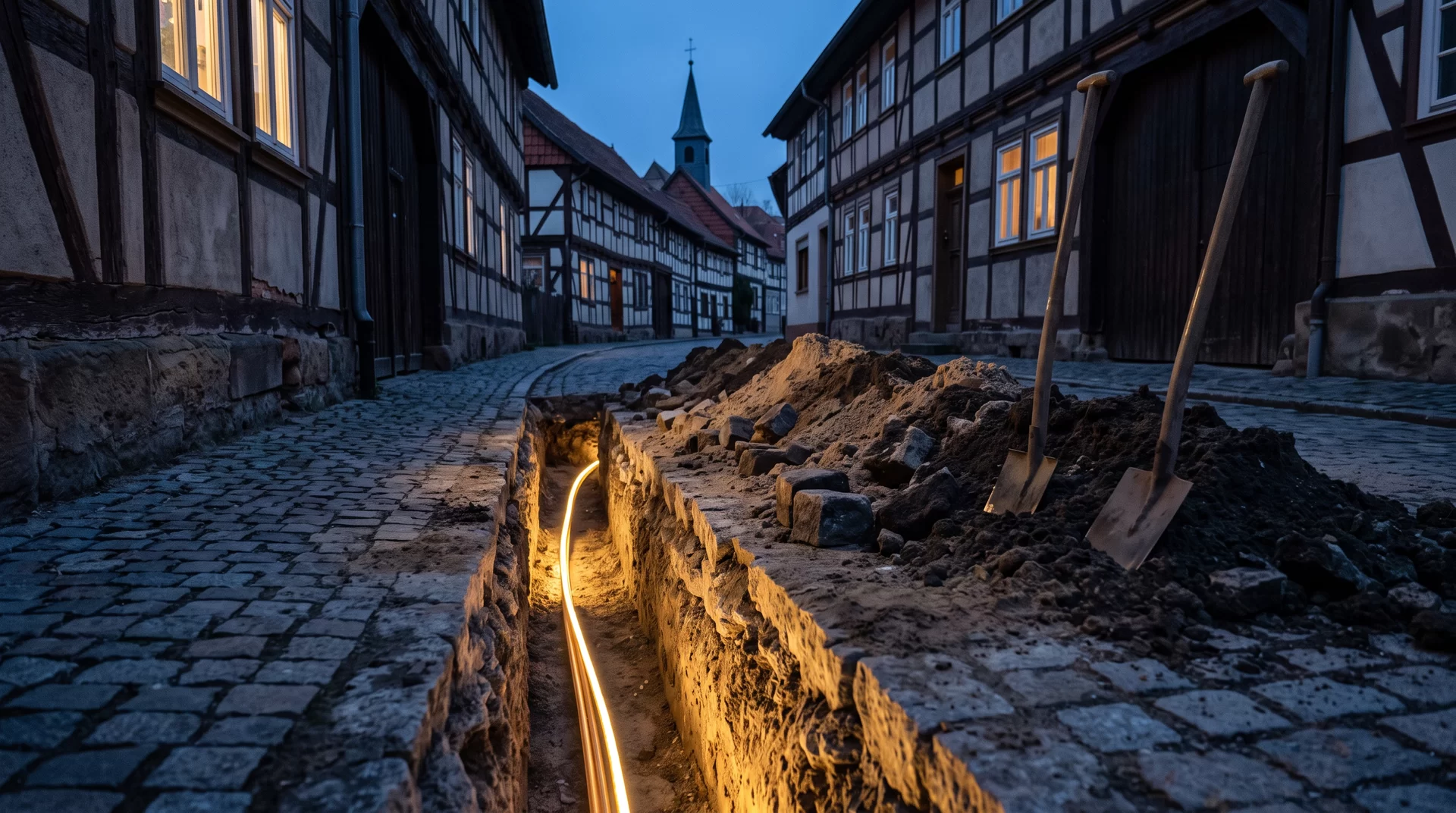
Fibre? The people of Etteln laid it themselves in the outlying areas in 2020, in the middle of the Covid lockdown. 65 residents, around 30 kilometres, some 3,500 hours of digging over six months.
At the end of October 2024, Etteln won the IEEE Smart Cities Contest, run by the world's largest engineering association. Runner-up was Hong Kong.
No magic potion
Nobody in Etteln is brewing a digitalisation magic potion. No different data protection laws apply. Nor does the village sit under a dome that mysteriously keeps the world's polycrises out.
The difference shows at one of the information steles outside the community hall: the marksmen's club poured the foundation, the church association laid the cables, the local village association did the installation.
There are simply people there who are up for it.
And that is the good news. Changing laws takes years, reforming the EU takes decades. Wanting it can start tomorrow morning.
The elves are welcome to sail. We'll stay here and lay fibre.